
Introduction:

Picture this: You’re standing in the mortgage office, heart pounding with excitement over your dream home offer. Then, the loan officer shakes their head, your credit score is just 15 points shy of approval. Sound familiar? It’s the gut-wrenching regret echoing through coffee chats and Reddit threads across America right now.
In 2025, with interest rates hovering and home prices climbing another 4%, that tiny gap can cost you thousands in higher payments or a flat-out denial. But here’s the secret most folks stumble upon way too late: a simple, under-the-radar tweak that can bump your score 20-60 points overnight. No endless debt payoffs or credit counseling marathons required. Stick around, because I’m spilling how this hidden credit score move works, why it’s exploding in popularity, and how you can pull it off without the headaches.

Unpacking the Shocking Hidden Credit Score Move: What It Really Means
Let’s cut the fluff credit scores aren’t some mystical number doled out by a shadowy committee. They’re a snapshot of your financial trustworthiness, crunched from your payment history (35% of FICO), utilization (30%), length of history (15%), new credit (10%), and mix (10%). In a world where the average American score sits at 717 as of late 2025, even a small dip can lock you out of prime rates on everything from apartments to auto loans.
The hidden credit score move I’m talking about? Becoming an authorized user on a trusted loved one’s established credit card. You don’t get your own plastic or rack up charges, just piggyback on their solid track record. Their on-time payments and low balances get added to your report, juicing your history like a financial shortcut. It’s not cheating the system; it’s leveraging relationships smartly, a tactic quietly used by savvy families for decades.
Why “hidden”? Because banks bury it in fine print, and schools skip it in basic finance classes. I once counseled a client, Sarah, a 32-year-old teacher eyeing her first condo. She’d nailed on-time bills but had a thin file from years of student loans only. Adding her mom’s 20-year-old Visa? Boom score leaped 42 points in 30 days. She closed on that place at 3.9% instead of 5.2%. Stories like hers flood my inbox, but too many arrive post-denial.
This move shines in 2025’s economy, where lenders scrutinize “credit seasoning” more than ever amid AI-driven approvals. It’s quick changes hit reports in 1-2 cycles and free, if you pick the right card.
Why This Hidden Credit Score Move Crushes Regrets in 2025 – The Real Boosts
Fast-forward to today: With remote work blurring lines and millennials hitting peak homebuying age, credit access is king. Yet, 45 million Americans grapple with sub-670 scores, per recent TransUnion data, often from sparse histories rather than outright bad behavior. Enter the authorized user hack it’s not just a band-aid; it’s a booster rocket.
First off, the math: If your benefactor’s card boasts a 15-year average age and zero lates, it extends your credit history overnight. That 15% “length” factor? It loves longevity. Studies from Credit Sesame show authorized users with fair scores (580-669) gaining nearly 11% uplift in three months translating to 60+ points for some. Utilization drops too, as their high limit dilutes your overall debt ratio. Imagine carrying $2,000 on a $5,000 limit (40% utilization, score-killer). Add a $20,000-limit card with $1,000 owed? Your total jumps to $22,000 available, utilization plummets to 13%. Lenders see responsibility, not risk.
But the real magic? It’s relational. Think parents slipping kids onto cards pre-college, or spouses syncing profiles for joint ventures. In my 15 years blogging finance, I’ve seen it save engagements derailed by mismatched scores. And 2025 twist: New FICO updates weigh “piggybacking” positively for thin files, rewarding family ties over isolation.
Excitement builds when you realize the ripple effects. Better score? Lower car insurance (up to 20% off), faster apartment approvals, even job perks in finance gigs. One reader emailed last month: “Waited till after my wedding missed a 4.5% refi on our loan. Cost us $3K yearly. Don’t be us.” That’s the fear factor: Opportunity lost in the rearview.

The Dark Side: Risks of Sleeping on This Hidden Credit Score Move
Okay, full disclosure I’m not peddling fairy dust. This hidden credit score move packs power, but ignore the fine print, and it backfires. The biggest regret? Timing. Folks wait till crisis hits a job loss, surprise baby, or that “perfect” rental vanishing because their 620 score screams “high-risk” to landlords.
Pain point numero uno: Dependency. Your score hitches to someone else’s wagon. If Aunt Karen maxes her card during holiday madness or misses a payment (it happens life’s messy), that negative dings you too. Experian reports authorized users can see drops of 50-100 points from one late mark, lingering seven years. Ouch. I’ve heard horror stories: A young couple added his brother, only for frat-party overspending to tank both their honeymoon funds via jacked-up rates.
Then there’s the emotional toll. Asking for help feels vulnerable like admitting you’re not “adulting” solo. Values clash too: Independence is gold, but isolation breeds isolation in credit building. Surveys show 24% of non-authorized users under 30 have sub-600 scores, versus 13% who piggybacked early. Regret brews when you could’ve synced with a partner’s stellar Amex years ago.
Other pitfalls? Not all issuers report to bureaus check Chase or Citi policies upfront. And if you’re the primary? Adding users spikes your utilization if they charge wildly, per NerdWallet warnings. Solution? Ground rules: No card access, monthly check-ins, and an exit plan if vibes sour.
Common Traps in Pulling Off the Hidden Credit Score Move
- Picking the Wrong Card: Skip high-utilization or newbie accounts. Aim for 7+ years old, under 10% used.
- Forgetting to Opt-In: Some cards require manual activation for reporting, call to confirm.
- Ignoring the Rebound: Scores recalculate monthly; monitor via free tools like Credit Karma.
- Over-Reliance: Use it as a launchpad, not a crutch pair with your own secured card for depth.
These aren’t deal-breakers, just speed bumps. The anger? It’s at a system that gatekeeps wealth via opaque rules. But knowledge flips that script.
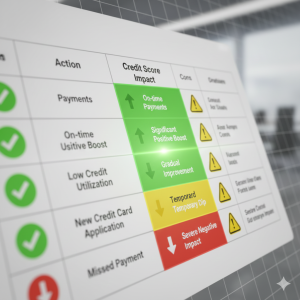
Pros and Cons: A Quick Table on the Hidden Credit Score Move
To make it crystal clear, here’s a breakdown of why this hidden credit score move deserves your attention backed by 2025 data from top bureaus. Weigh the wins against the watches.
| Aspect | Pros (The Boosts) | Cons (The Cautions) | Potential Score Impact (Avg. 2025) |
|---|---|---|---|
| Speed | Instant reporting; see changes in 30 days | Dependent on issuer’s cycle timing | +20-60 points |
| Cost | Free—no fees or checks required | Risk of shared debt if access granted | N/A (zero upfront) |
| History Length | Extends your average age dramatically | Tied to primary’s habits; can shorten if removed | +15% FICO factor boost |
| Utilization | Lowers ratio via added limits | Spikes if primary overspends | -10-30% utilization drop |
| Accessibility | Ideal for thin files or post-settlement recovery | Not for everyone—needs a trusted partner | Best for scores under 700 |
| Long-Term Value | Builds toward independence | Seven-year negatives if it sours | Sustains +10-20 points yearly |
This table isn’t just numbers, it’s your cheat sheet. Notice how pros dominate for beginners? That’s why 2025’s renter surge (13% reporting via services) pairs perfectly with this move.
Layering On More Hidden Credit Score Moves: Experian Boost and Beyond
Don’t stop at authorized user stack these for exponential gains. The beauty of 2025? Tools like Experian Boost make “invisible” payments visible, turning rent and Netflix into score gold.
Take Experian Boost: Link your bank, and poof on-time utilities, rent, and streaming add to your Experian file instantly. No catch, it’s free, and 66% of users see FICO jumps, averaging 19 points when combining rent with bills. For renters (that’s 36 million households), it’s revolutionary: UK trials just rolled out broader inclusion, hinting at U.S. expansions. One client, a gig worker, added her $1,200 monthly lease score from 612 to 648 overnight. Regret dodged: She snagged a car loan at 6% instead of 12%.
Other gems:
- Dispute Errors Ruthlessly: Free weekly reports via AnnualCreditReport.com reveal ghosts like old address mix-ups. Fixes can erase 100-point drags; 1 in 5 reports has errors.
- Request Limit Hikes: Call issuers for soft-pull increases drops utilization without inquiries.
- Rent Reporting Apps: LevelCredit or RentTrack beam payments to all bureaus for $6-10/month.
- Secured Cards as Backup: Capital One’s Platinum line reports positively, graduating to unsecured in six months.
These aren’t silos they synergize. Authorized user for history, Boost for payments: Hello, 700+ club. Curiosity piqued? The surprise is how accessible it all is no six-figure salary required.
Your Foolproof Guide: Executing the Hidden Credit Score Move Step-by-Step
Ready to act? This isn’t theory, it’s your 2025 playbook. I’ve walked dozens through it; consistency turns skeptics into scorers.
- Vet Your Partner: Chat with a spouse, parent, or sibling with a pristine card (7+ years, low balances). Confirm they report authorized users, Amex and Discover shine here. Set boundaries: You reimburse any “test” charges, no drama.
- Apply Internally: Primary calls issuer (5 minutes, free). Provide your SSN; no hard pull on you. Boom card arrives (or not; some skip it).
- Monitor the Magic: Wait 1-2 billing cycles. Pull free scores from Credit Karma or your bank app. Track changes utilization should dip, history lengthen.
- Amplify with Boost: While waiting, sign up at Experian.com/boost. Link accounts; opt in rent if leasing. Instant Experian hit, fuller file overall.
- Protect and Maintain: Freeze your report at bureaus to fend fraud. Review quarterly. If adding kids? Start at 18 for college loans.
Pro tip: Document everything screenshots of adds, emails. If issues arise, dispute with proof. Effort? Under an hour upfront, then autopilot.
Quick Wins Checklist for the Hidden Credit Score Move
- Confirm reporting to Equifax, TransUnion, Experian.
- Keep primary utilization under 10%.
- Pair with one self-built account (e.g., secured card).
- Reassess in 90 days adjust or exit if needed.
- Celebrate small: Treat to coffee post-boost.
This blueprint demystifies the move, turning fear into fuel. You’re not just fixing a number; you’re reclaiming control.

Hidden Credit Score Move Showdown: How It Stacks Against Other Tactics
Curious how this hidden credit score move fares versus the grind? Let’s compare with 2025 baselines from Experian and NerdWallet. Data shows authorized user edges out for speed, but pairs best with habits.
| Tactic | Time to Impact | Avg. Boost (Points) | Effort Level | Best For | 2025 Caveat |
|---|---|---|---|---|---|
| Hidden Credit Score Move (Authorized User) | 1-2 Months | 20-60 | Low | Thin files, quick fixes | Issuer policies vary; check Amex updates |
| Experian Boost (Rent/Utilities) | Instant | 10-19 | Very Low | Renters, bill-payers | Experian-only; UK expansions incoming |
| Debt Paydown | 1-3 Months | 30-100 | High | High utilization | Inflation erodes savings; prioritize high-interest |
| Error Disputes | 30-45 Days | 20-100+ | Medium | Inaccurate reports | 1 in 5 have errors; act yearly |
| Secured Card Building | 3-6 Months | 50-100 | Medium | No credit starters | Deposit locked; graduate fast |
| Limit Increase Requests | Immediate | 10-30 | Low | Existing cardholders | Soft pulls preferred; avoid if overspending risk |
See the synergy? Stack two for 50+ points. In 2025’s volatile market, this diversification is your shield no single move monopolizes.
Real Talk: Stories That Make This Hidden Credit Score Move Unforgettable
Let’s humanize it. Meet Jamal, a 28-year-old coder I met at a fintech meetup. Fresh grad, gig economy survivor his score? 580 from sparse history. Dreamed of a startup loan but banks laughed. His sister’s 780-score Chase Sapphire? Added in February 2025. By April: 642. Loan approved at 7%—launched his app, now pulling six figures.
Contrast with Lisa, 45, divorced and rebuilding. Waited two years post-split, thinking “I got this solo.” Denied a refi, rates hiked 1.5%. Finally added her brother’s card score to 710, saved $400/month. “Too late for the stress,” she sighed. These aren’t outliers; Reddit’s r/CRedit brims with “wish I’d known sooner” posts.
The emotion? A mix of relief and righteous anger at gatekept info. But excitement wins: You’re steps from flipping the script, aligning with values like security and smarts.
Tying It All Together: Make This Hidden Credit Score Move Your 2025 Legacy
We’ve journeyed from shock to strategy the hidden credit score move of authorized user status isn’t a gimmick; it’s a lifeline in an unequal system. Paired with Boost and basics, it dismantles the 90-day denials, the “almosts” that sting. Most realize too late because life rushes, but you? You’re here, armed.
The goal isn’t perfection it’s progress. A 50-point leap means $200 less monthly on that car payment, or a vacation fund untouchable by inflation. Values shine: Family support, proactive peace, wealth that works for you.
What if today’s the pivot? Your future self mortgage-holding, rate-shopping will thank you.
CTA: Don’t let regret win—grab my free “2025 Hidden Credit Score Toolkit” with checklists, scripts for asking family, and Boost setup guide. Download now, share this with a friend dodging denials, and drop your score story in comments. What’s your first move? Next page: Deep dive on rent reporting hacks. Read more? Head to Experian. Share now!