Introduction
Every year, Black Friday promises the biggest deals of the season. But behind the flashing discounts and countdown timers lies a growing financial threat most shoppers never see coming.
A new wave of reports reveals a surge as credit-card-fueled Black Friday spending, and for many households, this spike isn’t a sign of opportunity, it’s a warning.
With economic pressure rising, credit-card interest rates climbing, and budgets tightening, this year’s Black Friday may have quietly created a debt bomb waiting to explode.
Let’s break down the numbers, the danger, and what it means for your financial future.
Credit-Card-Fueled Black Friday Crisis
Recent reports reveal alarming trends:
-
U.S. revolving credit (mostly credit cards) surged at 20.2% annual rate in December, a dramatic jump.
-
Two-thirds of Black Friday shoppers admitted they overspent or bought more than intended (CreditCards.com).
-
24% opened new debt or new credit accounts during Black Friday weekend.
-
And here’s the scary part: 45% of those who went into debt considered bankruptcy afterward (PRWeb report).
This isn’t just holiday overspending.
This is a nationwide red flag.
Why This Year Is Different — And More Dangerous
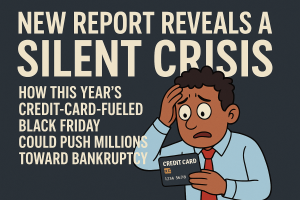
What makes 2025 uniquely risky?
-
Interest rates are higher than ever.
Nearly 48% of UK credit-card balances incur interest at 35.8% APR (MoneyFacts Group). -
Credit-card balances are already at record highs.
Households are entering Black Friday with less breathing room than past years. -
Inflation is shrinking purchasing power, pushing more shoppers to rely on credit.
-
Minimum payments barely touch the principal, creating long-term debt traps.
And with costs rising faster than wages, millions are inching toward the financial edge.
Who’s Most at Risk?
Below is a table that breaks down the most vulnerable groups:
| Group | Why They’re Vulnerable | Risks |
|---|---|---|
| Young adults & millennials | Stagnant wages + buy-now-pay-later habits | Maxed-out cards, credit score damage |
| Lower-income households | Using credit for essentials | Debt spirals, missed payments |
| Families with multiple debts | Mortgage + car loans + holiday spending | High default & bankruptcy risk |
| Impulse buyers | “Deal fear” + scarcity marketing | Regret, long-term debt |
The Dangerous Path Toward Bankruptcy
A CNBC report warns that retail credit cards are increasingly driving bankruptcy filings, rising 12% year-over-year (CNBC).
Here’s how it happens:
-
Black Friday purchase
-
Interest kicks in
-
Minimum payments barely reduce the balance
-
Debt grows faster than income
-
Borrowing increases
-
Credit score drops
-
Bankruptcy becomes the last option
This is the “silent crisis” experts fear.
How to Protect Yourself Before It’s Too Late
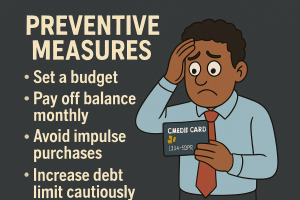
Smart Strategies to Avoid the Black Friday Debt Trap
-
Set a spending limit based on your monthly income.
-
Use debit or cash, not credit.
-
If you must use credit, pay it off this month.
-
Avoid store cards with high APRs and hidden fees.
-
Track all expenses and debts in one place.
-
Use balance-transfer cards cautiously — only with a clear repayment plan.
-
Seek early financial advice if you feel overwhelmed.
Conclusion: The Sale Isn’t Worth the Risk
Black Friday and holiday sales are marketed as golden opportunities to save money. But when those purchases are made with credit cards and later spiral into unpaid debt, the initial pleasure can quickly sour.
This year’s numbers soaring credit-card balances, record interest rates, and mounting debt among shoppers suggest we may be witnessing the early stages of a widespread financial crisis. For many, bankruptcy is no longer a remote possibility; it’s a real risk.
If you value your financial future, treat this Black Friday for what it really is: a temptation, not a bargain. Spend consciously, borrow responsibly, and always plan for the long term. Because the real “deal” isn’t what you buy: it’s how you manage the cost.
Black Friday makes it feel like you’re saving money… but if it’s fueled by credit, you may actually be losing far more than you think.
The signs are clear:
-
Debt is rising.
-
Interest is climbing.
-
Consumers are struggling.
-
Bankruptcies are increasing.
This year’s Black Friday wasn’t just a shopping event — it was a warning.
If you want to safeguard your financial future, the best “deal” you can make is this:
Spend with intention. Borrow wisely. Protect your peace.






2 comments
Interesting read! Seeing more platforms like jljl boss casino catering to the Philippine market is notable. Account verification steps, like those outlined, are crucial for security – good to see that emphasized! It’s a competitive space, though.
Sound!