Introduction: Warren Buffett Secret Compound Effect.

Imagine a young investor in 1965 snapping up a struggling textile mill for pennies, only to watch it balloon into a trillion-dollar powerhouse over six decades. Now, at 95, that investor, Warren Buffett, steps down as CEO of Berkshire Hathaway, leaving a legacy that’s not just about smarts, but a secret force most overlook: the compound effect.
On January 1, 2026, Buffett officially retired from the CEO role he held since 1965, handing the reins to successor Greg Abel while staying on as chairman. This milestone isn’t just news, it’s a masterclass in how patient compounding turns modest starts into monumental wealth. But why do so many investors underestimate this power? Let’s unpack it.

Warren Buffett Retires: A Look Back at His Unmatched Journey Since 1965
Buffett’s retirement marks the end of an era. Starting with Berkshire Hathaway, a failing New England textile company, he pivoted to insurance and savvy acquisitions. By 2026, the conglomerate spans railroads, energy, consumer goods, and massive stock holdings like Apple.
His “final score”? Berkshire’s stock soared over 6,100,000% since 1965, per Motley Fool analyses. That’s a compound annual growth rate (CAGR) of about 19.8%, nearly double the S&P 500’s 10.4%. Yet, the real secret isn’t picks, it’s compounding’s relentless math.
As Buffett often quipped, “Time is the friend of the wonderful company.” His retirement highlights how underestimating this leads to missed fortunes.
The Secret Compound Effect: What Most Investors Underestimate
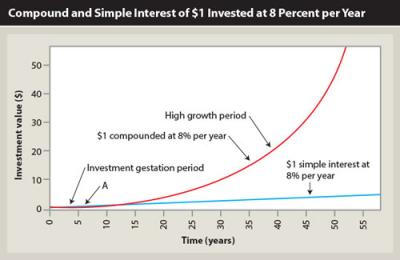
Compounding is simple: Earnings on earnings, snowballing over time. Invest $1 at 10% annually; after 7 years, it’s $2, then it accelerates. Buffett calls it the “eighth wonder of the world.”
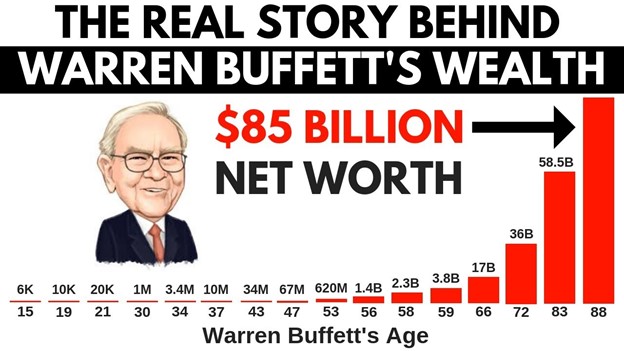
Most underestimate it because it’s slow at first. In Buffett’s case, his wealth exploded post-50, with 99% amassed after age 65, as AES International infographics show. Early years build the base; patience unleashes the magic.
Without compounding, Buffett’s returns would be linear, good, but not legendary. Investors chase quick wins, ignoring how small, consistent gains compound into empires.
Warren Buffett’s Final Score: Breaking Down the Numbers Since 1965
Let’s crunch it. From 1965 to 2025, Berkshire delivered a 19.8% CAGR, per Statista charts. A $1,000 investment? Over $5 million today.
Compare to S&P 500: About 10% CAGR, turning $1,000 into roughly $46,000. Buffett’s edge? Value investing plus compounding’s tailwind.
Here’s a table comparing decadal performance:
| Decade | Berkshire CAGR | S&P 500 CAGR | Key Buffett Move |
|---|---|---|---|
| 1965-1974 | 20.2% | 3.7% | Shift to insurance acquisitions |
| 1975-1984 | 29.5% | 14.8% | Coca-Cola stake buildup |
| 1985-1994 | 28.6% | 15.4% | Focus on “moat” companies |
| 1995-2004 | 9.3% | 8.3% | Tech bubble navigation |
| 2005-2014 | 9.8% | 7.7% | Railroad, energy expansions |
| 2015-2025 | 12.1% | 13.9% | Apple bet, cash hoard |
Data from Tickeron breakdowns and Berkshire reports. Notice how compounding amplified even modest decades.
How the Compound Effect Powered Buffett’s Strategy Since 1965
Buffett’s playbook: Buy undervalued businesses, hold forever, let compounding work. No fancy algorithms—just patience.
- Long-Term Holds: Stakes like Coca-Cola (since 1988) compounded dividends into billions.
- Reinvestment: Insurance “float” funded buys, compounding without debt.
- Avoiding Churn: Low turnover minimized taxes, maximizing compound growth.
- Margin of Safety: Bought cheap, reducing risk while compounding upsides.
As CNBC retrospectives note, this turned $10 million in 1965 into trillions by 2026. Most underestimate because they sell too soon, interrupting the snowball.

Why Most Investors Underestimate the Compound Effect in Buffett’s Success
It’s human nature: We crave instant results. Compounding feels boring early on, Buffett was “just” a millionaire at 30, billionaire at 56.
Common pitfalls:
- Short-Term Thinking: Trading erodes gains via fees/taxes.
- Emotional Decisions: Panic selling halts compounding.
- Overlooking Time: Starting late means less snowball time.
- Ignoring Inflation: Compounding beats it; savings don’t.
Buffett’s retirement reminds us: Underestimate compounding, and you miss his “final score.” As Yahoo Finance pieces illustrate, his outperformance is 99% compounding, 1% genius.
Lessons from Warren Buffett Retires: Applying the Compound Effect Today
Buffett’s exit isn’t goodbye, it’s a handover to Abel, who’ll continue the compound ethos. For you? Start now.
- Invest Early: Even $100/month at 7% compounds to $200K in 40 years.
- Choose Wisely: Index funds mimic S&P’s 10%, compounding reliably.
- Stay Put: Buffett’s holds averaged decades.
- Educate Yourself: Read his letters for compound wisdom.
In 2026’s volatile markets, compounding is your secret weapon. Don’t underestimate it like most do.

The Compound Effect in Action: Real-World Examples Beyond Buffett
Buffett’s story inspires, but it’s replicable. Take Peter Lynch: 29% CAGR over 13 years at Fidelity, compounding turned $1,000 into $28,000.
Or everyday folks: A 25-year-old saving $5K/year at 8% hits $1M by 65. Underestimate? Save sporadically, end with half.
Buffett’s final score shows: Compounding favors the patient. As NPR coverage of his retirement notes, his legacy is teaching this underestimated power.
Warren Buffett Retires: What His Successors Must Remember About the Compound Effect
Greg Abel steps in with big shoes. Buffett’s advice? Focus on long-term compounding, not quarterly hype.
Berkshire’s $184B cash pile, as Fool warnings highlight, positions for compound-friendly buys. Abel’s challenge: Sustain that 19.8% magic without underestimating time’s role.
For investors, Buffett’s retirement is a call: Harness compounding now, or regret later.
Underestimating the Compound Effect: Common Myths Debunked
Myth 1: “I’m too old to start.” False, compounding works at any age; Buffett amassed most post-65.
Myth 2: “High returns beat consistency.” Nope, Buffett’s steady 19.8% trumps volatile 30% swings.
Myth 3: “Compounding is for the rich.” Start small; apps like Vanguard make it accessible.
As Instagram insights echo, Buffett’s 19.8% doubled the S&P, pure compound effect.
Building Your Own Compound Effect Strategy Post-Buffett Retirement
Inspired? Craft yours:
- Assess Net Worth: Track assets minus debts.
- Set Goals: Aim for 15-20% savings rate.
- Invest Diversely: ETFs for broad compounding.
- Review Annually: Adjust like Buffett’s letters.
- Educate Continuously: Read Berkshire archives.
In a post-Buffett era, don’t underestimate this secret, it’s your path to a strong final score.
The Broader Impact: How Buffett’s Compound Effect Shaped Markets Since 1965
Buffett’s approach influenced billions. Value investing surged; index funds boomed after his endorsements.
His retirement sparks reflection: Compounding democratizes wealth. As TPR reports, he’s the “Oracle of Omaha” who proved patient math wins.
Underestimate it? Markets punish. Embrace it? Join the legends.

Reflections on Warren Buffett Retires: The Enduring Power of the Compound Effect
As Buffett retires, his final score since 1965, 19.8% CAGR, trillions created, underscores compounding’s secret might. Most investors chase trends, underestimating time’s multiplier.
But you can change that. Start compounding today; let it build your legacy. Buffett’s journey shows: It’s not magic, it’s math plus patience.
CTA: Dive deeper into Buffett’s strategies? Read his final letter on Berkshire’s site. Share this if it sparked your compound curiosity. What’s your first compounding step? Comment below! Explore more on successors at CNBC. Share now!